Travel Tips Series: #1 Booking your Holiday
Recently I have been talking to other people about their holiday plans for the summer and realised that not everyone books holidays the same. Some people will not take holidays(vacations) because the stress of planning it is too much and they think they can’t afford one. This got me thinking. I was under the impression that people searched out deals, planned meticulously and organised trips with excel sheets like my husband and I. Mostly I have found it’s quite the opposite. A major benefit of living overseas is having a minimum of 5 weeks off a year. This has allowed my husband and I to travel often. Our bank account has not always been on the same page as our dreams for organised trips or resorts so we started to research, plan and curate our own explorations. In these travel tips posts I will pick small parts of travel and dive into how we have managed to travel as often as we have on more of a budget. Most of the tips I am going to share are person experiences but others are borrowed and I have provided links for those where listed.
First thing you need to think about the 5 W’s.
Why: Why are you traveling? Are you looking to visit family, for business for enjoyment? It is important to know the why in your trip before book anything. Most people have limited time off so you want to ensure you use it strategically.
What: What do you want to achieve on this holiday? Do you want to make family memories, reconnect with a partner, enjoy time with friends. Do you want to cook food for yourself, do you want all inclusive or a mix of both?
Who: Who is going on this holiday? Are you going away with friends, a partner, family or solo? The number of people will impact accommodation, transport options and has a knock on affect on where you go and when.
Where: Where do you want to go? Are you after warm weather, cozy cabin feels, or city breaks. You need to also think about the time frame you have. Time differences, flights and transfers need to be considered as this can sometimes eliminate a day at the start and end of your trip.
When: When do you want to go? Do you have a specific time frame you need to travel? If you are traveling to an event or during kids time off school you will be more restricted with your travel. If you can travel mid week or outside of kids school holidays you are more likely to secure better prices.
Finding flights has become a bit of a sport for us over the years and here are some of the things we do every time we search for a holiday.
5 top Tips for Booking Flights
- Ensure you have opened an incognito or private tab. This will ensure your search history is not being tracked which can cause prices to increase.
- Book flights on Tuesdays, the prices seem to be lower. Avoid searching flights on the weekend (Prices seem to be higher). Travel mid week if possible. Friday and Sundays are expensive as people try to go away for weekends.
- Use comparison sites: Search on Googleflights, momondo, Skyscanner and Kayak. If you are open to where to go you can use Googleflights to enter your departure and put anywhere into the destination and it will show you where you can go during your desired dates.
- Be open to close by airports. Can you drive slightly further to a departure airport to get a direct or cheaper flight? This can save you time and money if done correctly. Searching on Momondo you can have 3 options in the departing search and 3 into the destination.
- Join reward programs and credit cards that can get you money off flights. In the USA Capital One has a brilliant card that you can use on daily purchases and cash in on travel. In the UK nectar points can be converted to Avios points for British Airways. Join airlines reward clubs, even for kids if they have their own seat. These miles will add up and can help take money off your future flights.
5 top tips for booking accommodation
- Locations, Location, Location: Look at the area you are going to and see where its located. This will help you get an idea for your budget as well as transport links. Weather you are walking around town, picking up some snack or exploring it is important to know how you will get around where ever it is you are going,
- Decide what kind of Accommodation you are looking for. What amenities do you want/need. Do you have a car to park (this can increase the cost drastically in a city so a more expensive hotel might provide secure parking). Do you need a kitchen to prepare food time? Are you traveling as a larger group? All of these needs will lead to different results.
- Hotel Bookings: look on comparison websites: Expedia, hotels.com, trivago and booking.com are all popular ones that you can get even better rates if you are a member( this is usually free and use their app). You will also earn reward points towards future stays and discounts on certain properties.
- Group booking: then try airbnb. If you are looking for more self contained resort/campsite locations in Europe try eurocamps. If you are looking in the UK for caravan try Hoseasons for a variety of prices and ratings. If you are looking for budget then haven, Butlins and parkdean are more likely to tick the box. If you are looking to spend a bit more then Center Parks is your go to. These are great options for families or groups who want a living space separate from the bedrooms and might want to have some food/snacks in their space. These are all great options if you have children with you as they geared towards families and have playgrounds and activities onsite for kids.
- Take advantage of what your accommodation has to offer. Always ask if they can provide a spare bed or cot(pack and play) If it saves you bringing one this can be so helpful with all the other items you are packing. See if there are options to check in early or late if your transportation requires. Some places will do this for an additional cost whilst others will provide this if they can. Regardless of those factors most places will provide extended luggage hold if you need it. This can allow you more time to relax and explore without lugging your cases around with you.
Final thoughts on booking your trip is to enjoy the process. Use tools like trip advisor for real reviews and photos from paying guests. Watch videos on youtube of the area/destination you are looking to go to and ask around for other peoples experiences. HAPPY PLANNING!
Where my love for travel all started: Pittsburgh PA
Coming soon!
Blog Posts
Weekend trip up the road
Growing up Italian American there were a couple of core values instilled in our family from a young age. The 3 F’s. Food, Family and Faith. This weekend we got 2/3 so I call that a win.
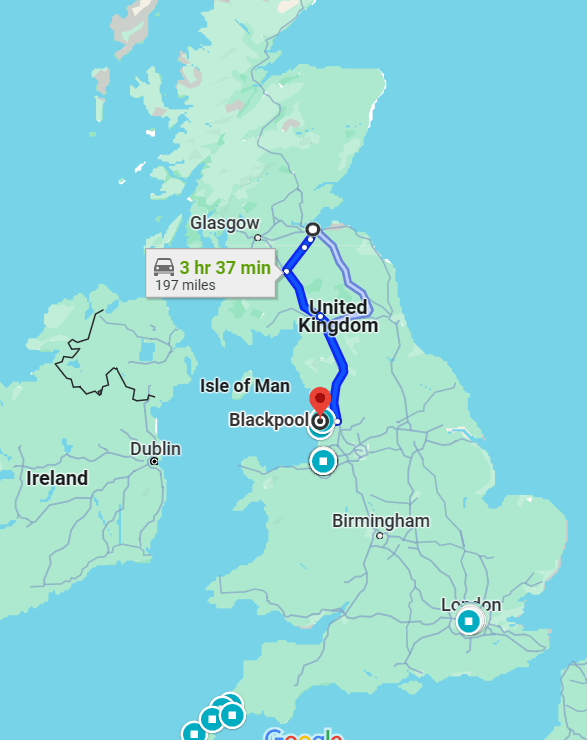
Since moving to the UK one of my favourite things has been that my sister lives here too. My sister (married a Scotsman) and her family live in Edinburgh (going risk it and say the best city in the UK and for those who want to argue at least in Scotland) Since we live in the Northwestern part of England, we are only 3.5 hours from each other. The drive through the Lake District is simply stunning and we usually see each other every 4-6 weeks depending on schedules.
This weekend was my nephew’s birthday party, so we loaded the car Friday morning before work, picked up the kids after school and headed “up the road”. It is a bank holiday this weekend meaning most places are closed Monday and schools are shut. HELLO 3 DAY WEEKEND!
A weekend in Edinburgh used to be a relaxing train ride up, reservations at a new restaurant and drinks at a trendy bar. My husband and I would take the train up and have a few drinks on the way and enjoy the scenery. Fast forward 9 years and 2 kids later, we drive the minivan up filled with all the “things” we will need. The checklist is slowly getting smaller as the boys are getting older, but it used to be a check list on our notes of all the things for the boys. This list still exists for larger holidays, but the baby one was insane.
Arriving late on Friday night the kids were like energiser bunnies with their cousins. My boys are 5, the birthday boy turning 4 and our goddaughter 18months old: them all together is short of exhusting). Bedtime is always a circus on the first night we are together. We arrived around 7:15 and they finally fell asleep at 10ish…Yes, we know this will not go well the next day.
Every trip up we try to see a neighborhood or area we haven’t before and explore new parks with the kids. This weekend my sister suggested we all go to Stockbridge. We grabbed some cakes and coffees from https://www.pastrysection.com/ and headed to the nearby Inverleith park. The pastries were delicious, and we had a picnic whilst the kids ran around. After a play and kick about with the footy (soccer ball) we headed to get some sandwiches to take on the road from https://twelvetriangles.co.uk/. This bakery has a few locations around Edinburgh, but this was our first visit. We grabbed some sandwiches, a sourdough loaf, and cheese scone for the road.
After a great weekend away, we went to my in-laws for a Sunday Dinner. In the UK this is a roast dinner. There are countless variations, combos, and family favorites. We had chicken and lamb, steamed carrots and broccoli, cauliflower cheese, stuffing and while many of these things will change Yorkshire puddings are a must in our family. Think savoury, puffed up pancake that you cover in gravy. Yes, I know it sounds crazy and yes, I made them for my now husband as breakfast when we first lived together (this is very wrong but very funny). After dinner we sat outside and enjoyed a mild day, very fitting for May bank holiday. The sun even started to make its summer debut and gave us a little preview.
-

Back To School
Term Dates in the USA vs UK
Growing up in the USA, the count down to summer was always something I remember. Anyone from the USA will be getting close to this point as May arrives next week. As a child you simply could not wait until school finished and you had freedom for 3 months: June, July and August were a humid and warm blur of local festivals, swimming and time to hang out with friends.
Fast forward to being a parent and this is a very different reality for my boys. In England, the school year is broken up into 6 half terms (5-7 weeks) that form 3 full terms. These terms start in September and go until July. Like everything, there are exceptions to what I am going to say about how these terms work (so if I haven’t covered all scenarios, it is not intentional). Usually in-between half terms schools have a week off and in-between full terms schools will have 2 weeks off.
A Typical break schedule might look like:
School begins start of September (Mid-August in Scotland)
1 week off at the end of October
2 weeks off at Christmas
1 week off in mid February
2 weeks off at Easter
1 week off in May (not in Scotland-they finish in June and forgo the break)
6 weeks off starting Mid July (Mid June for Scotland)
Pros and Cons to UK term dates
Pros: UK dates allow for more frequent breaks for students to prevent burnout and becoming disengaged. Families can take this time to go on holidays (vacations) throughout the year rather then just in the summer. With the UK being so close to many other European countries, there are cheap (under 50USD) return flights to take advantage of and are more like buses then flights. In 2 hours you can get to France, Spain, Italy, Ireland, The Netherlands and many more. Students are also thought to retain more learning with smaller chunks of time off than the 3 months in The States. Lastly, the weather in the UK is milder then most of the USA. The summer doesn’t get as hot so air conditioning in schools is not an issue. Most people don’t have air conditioning in their houses (every house probably has a few ancient fans in their loft for the heat wave we get once a year), if we are lucky.
Cons: If I am really honest I have adapted to this as my new normal for a school calendar. I will not say it is perfect but I will say it seems to work for most people. 1 con is that going away in these “school holidays” the price of holidays is significantly higher depending on where you go and when you book. I find this as more of a fun challenge to get around as many cheap holidays do still exist if you are willing to spend the time looking for them. There are still conversations here about retention and some people saying a 4 week summer would be better- this con list would change if that were the case.
Term dates in other countries
Over the last 13 year I have been lucky enough to live in Australia and France as well as the UK. I can not speak for all countries but I can for these two.
Aussie, Aussie, Aussie! Oi, Oi, Oi!
Being that Australia is located in the southern hemisphere their seasons are the opposite to us. Each state in Australia varies but the basic structure is school begins at the end of January and go ends right before Christmas in December. They have 3 x 2week breaks after each term and then a month break between academic years. Think shrimp on the barbie and dreaming of a white sand beach after opening up all the pressies from Father Christmas
Oui, Oui
France is similar to many other European countries with its approach to the school calendar. Schools in France also have varying term dates depending on their “zone”. All the regions in France are split into these zones. This helps to keep the price of holidays down for families as the demand is more spread out. The shorter breaks are 2 weeks at the end of October, 2 weeks at Christmas, 2 weeks in Feb, 2 weeks in spring. French schools start around the beginning of September and end beginning of July. Many families have holiday homes in the country/beach that have been in their families for years. It is also common for children to go and “visit” Grandparents in the holidays if parents are still working or if they are going on holiday without the kids. This is one cultural norm that I can fully see the benefits of. If they do not have a family holiday home then others might consider renting “gites” like a lodge or cabin for a few weeks out of cities to relax over the holidays. They truly embrace this time off and use it to relax. A very interesting fact about the French school system is that most children do not attend school on Wednesday. This is a day for activities and sport. Children might attend lessons or sports but no school on this day. It is quite common for some parents to work part time and have this day off with their children.
-
Back To School
Term Dates in the USA vs UK
Growing up in the USA, the count down to summer was always something I remember. Anyone from the USA will be getting close to this point as May arrives next week. As a child you simply could not wait until school finished and you had freedom for 3 months: June, July and August were a humid and warm blur of local festivals, swimming and time to hang out with friends.
Fast forward to being a parent and this is a very different reality for my boys. In England, the school year is broken up into 6 half terms (5-7 weeks) that form 3 full terms. These terms start in September and go until July. Like everything, there are exceptions to what I am going to say about how these terms work (so if I haven’t covered all scenarios, it is not intentional). Usually in-between half terms schools have a week off and in-between full terms schools will have 2 weeks off.
A Typical break schedule might look like:
School begins start of September (Mid-August in Scotland)
1 week off at the end of October
2 weeks off at Christmas
1 week off in mid February
2 weeks off at Easter
1 week off in May (not in Scotland-they finish in June and forgo the break)
6 weeks off starting Mid July (Mid June for Scotland)
Pros and Cons to UK term dates
Pros: UK dates allow for more frequent breaks for students to prevent burnout and becoming disengaged. Families can take this time to go on holidays (vacations) throughout the year rather then just in the summer. With the UK being so close to many other European countries, there are cheap (under 50USD) return flights to take advantage of and are more like buses then flights. In 2 hours you can get to France, Spain, Italy, Ireland, The Netherlands and many more. Students are also thought to retain more learning with smaller chunks of time off than the 3 months in The States. Lastly, the weather in the UK is milder then most of the USA. The summer doesn’t get as hot so air conditioning in schools is not an issue. Most people don’t have air conditioning in their houses (every house probably has a few ancient fans in their loft for the heat wave we get once a year), if we are lucky.
Cons: If I am really honest I have adapted to this as my new normal for a school calendar. I will not say it is perfect but I will say it seems to work for most people. 1 con is that going away in these “school holidays” the price of holidays is significantly higher depending on where you go and when you book. I find this as more of a fun challenge to get around as many cheap holidays do still exist if you are willing to spend the time looking for them. There are still conversations here about retention and some people saying a 4 week summer would be better- this con list would change if that were the case.
Term dates in other countries
Over the last 13 year I have been lucky enough to live in Australia and France as well as the UK. I can not speak for all countries but I can for these two.
Aussie, Aussie, Aussie! Oi, Oi, Oi!
Being that Australia is located in the southern hemisphere their seasons are the opposite to us. Each state in Australia varies but the basic structure is school begins at the end of January and go ends right before Christmas in December. They have 3 x 2week breaks after each term and then a month break between academic years. Think shrimp on the barbie and dreaming of a white sand beach after opening up all the pressies from Father Christmas
Oui, Oui
France is similar to many other European countries with its approach to the school calendar. Schools in France also have varying term dates depending on their “zone”. All the regions in France are split into these zones. This helps to keep the price of holidays down for families as the demand is more spread out. The shorter breaks are 2 weeks at the end of October, 2 weeks at Christmas, 2 weeks in Feb, 2 weeks in spring. French schools start around the beginning of September and end beginning of July. Many families have holiday homes in the country/beach that have been in their families for years. It is also common for children to go and “visit” Grandparents in the holidays if parents are still working or if they are going on holiday without the kids. This is one cultural norm that I can fully see the benefits of. If they do not have a family holiday home then others might consider renting “gites” like a lodge or cabin for a few weeks out of cities to relax over the holidays. They truly embrace this time off and use it to relax. A very interesting fact about the French school system is that most children do not attend school on Wednesday. This is a day for activities and sport. Children might attend lessons or sports but no school on this day. It is quite common for some parents to work part time and have this day off with their children.
 Wade Across The Pond